
The Writing Life by Annie Dillard: A Comprehensive Exploration
Annie Dillard’s The Writing Life, available as a PDF via OverDrive and the Internet Archive, delves into the courageous and often solitary existence of a writer, offering profound insights.
Annie Dillard, a Pulitzer Prize-winning American author, is celebrated for her poetic prose and insightful explorations of nature and spirituality. The Writing Life, published in 1989, isn’t a “how-to” guide, but rather a deeply personal and philosophical meditation on the craft of writing.
Accessible as a PDF through platforms like OverDrive and the Internet Archive, the book offers a unique glimpse into Dillard’s own experiences and struggles. It’s a collection of essays examining the dedication, discipline, and daring required to live a writing life, resonating with both aspiring and established authors.
II. Overview of the Book’s Core Themes
The Writing Life, readily available as a PDF, centers on themes of solitude, discipline, and the inherent uncertainty of the creative process. Dillard emphasizes the necessity of a dedicated workspace – “a room with no view” – to minimize distractions and foster focused concentration.
The book also explores the courage required to confront the blank page and embrace vulnerability in one’s writing. Dillard’s work, accessible via OverDrive and the Internet Archive, highlights the importance of observation, precise language, and a willingness to risk failure in pursuit of authentic expression.
III. The Structure and Style of “The Writing Life”
The Writing Life, obtainable as a PDF through platforms like OverDrive and the Internet Archive, is structured as a series of concise, meditative essays. Dillard employs a lyrical and introspective style, blending personal anecdotes with philosophical reflections on the writing process.
The book’s fragmented form mirrors the often-disjointed nature of creative thought. Her prose is characterized by vivid imagery and precise language, demonstrating the very techniques she advocates for writers. This accessible PDF offers a moving account of Dillard’s experiences.

IV. Dillard’s Conception of the Writer’s Workspace
Dillard, as explored in The Writing Life – readily available as a PDF from sources like the Internet Archive – emphasizes the critical need for a dedicated workspace. She famously advocates for “a room with no view,” prioritizing isolation to foster deep concentration.
This isn’t merely physical space; it’s a mental sanctuary. The PDF reveals her belief that minimizing distractions is paramount, allowing the writer to fully immerse themselves in the internal landscape of creation. Such focused environments are essential for authentic expression;
IV.A. The Importance of Isolation and “A Room with No View”
As detailed in The Writing Life – accessible as a PDF through platforms like OverDrive – Dillard’s concept of “a room with no view” isn’t about aesthetic preference, but a deliberate strategy. She argues that external stimuli impede the internal process of writing, hindering true observation.
The PDF illustrates how isolation allows the writer to turn inward, fostering a heightened awareness of inner thought and language. This deliberate removal from the world is crucial for cultivating the necessary solitude to confront the challenges of the craft.
IV.B. Minimizing Distractions for Focused Writing
Dillard, in The Writing Life – readily available as a PDF from sources like the Internet Archive – emphasizes the necessity of shielding the writing process from interruption. She posits that even seemingly minor distractions fracture concentration, disrupting the delicate flow of thought required for meaningful work.
The PDF reveals her belief that a writer must actively cultivate an environment conducive to deep focus, rejecting the constant demands of the external world. This disciplined approach, she argues, is fundamental to achieving the clarity and precision essential to effective writing.
V. The Experience of Writing: Dillard’s Perspective
As explored in The Writing Life – accessible as a PDF through platforms like OverDrive – Dillard portrays writing not as a glamorous pursuit, but as a demanding and often unsettling process. The PDF details her honest account of the initial stages, characterized by uncertainty and self-doubt, a common struggle for all writers.
Dillard’s work, available in PDF format, reveals that true writing emerges from a willingness to confront these anxieties and push through them, ultimately seeking a state of immersive concentration where self-consciousness dissolves.
V;A. The Initial Stages: Uncertainty and Doubt
Dillard, in The Writing Life – readily found as a PDF – candidly describes the paralyzing uncertainty that plagues writers at the outset of a project. The PDF reveals her acknowledgement of the inherent doubt, the feeling of inadequacy, and the struggle to even begin translating thoughts into coherent prose.
This initial phase, detailed within the PDF, isn’t presented as a hurdle to overcome, but as an intrinsic part of the creative process, a necessary discomfort that fuels the search for clarity and authentic expression.

V.B; The Flow State and Loss of Self-Consciousness
Dillard’s The Writing Life, accessible as a PDF, beautifully articulates the elusive “flow state” – a period where writing transcends conscious effort. The PDF illustrates how, during these moments, the writer disappears, absorbed entirely in the work, losing all self-awareness and critical judgment.
This state, explored in the PDF, isn’t sought deliberately, but rather arrives unexpectedly, a gift born from sustained focus and immersion. It’s a temporary suspension of the ego, allowing language to flow freely and authentically.
V.C. The Role of Revision and Editing
As detailed in the PDF version of The Writing Life, Annie Dillard emphasizes that revision isn’t merely correcting errors, but a fundamental reshaping of the work. The PDF reveals her view that initial drafts are exploratory, a necessary stage before true crafting begins.
Dillard, through her experiences detailed in the PDF, suggests that editing demands a ruthless objectivity, a willingness to dismantle and rebuild. It’s a process of discerning what truly serves the piece, stripping away the superfluous to reveal the core essence.
VI. Dillard on the Nature of Language
The PDF of The Writing Life showcases Annie Dillard’s profound contemplation of language, viewing it not as a mere tool for communication, but as a vital instrument for perceiving reality. Dillard, as explored in the PDF, believes language actively shapes our understanding of the world around us.
Her writing, accessible in the PDF format, stresses the relentless pursuit of precise and evocative language, rejecting clichés and striving for originality. Dillard’s insights, found within the PDF, highlight the writer’s responsibility to wield language with intention and care.
VI.A. Language as a Tool for Perception
As detailed in the PDF version of The Writing Life, Annie Dillard posits that language isn’t simply a means to express perception, but actively creates it. The PDF reveals her belief that words aren’t neutral labels; they fundamentally shape how we experience and understand the world.
Dillard, through essays available in the PDF, argues that careful linguistic choices can unlock deeper levels of awareness. The PDF demonstrates her conviction that the writer’s task is to refine language to more accurately reflect—and even enhance—perception itself.
VI.B. The Search for Precise and Evocative Language

The PDF of The Writing Life emphasizes Dillard’s relentless pursuit of language that is both precise and powerfully evocative. She doesn’t settle for approximations; the PDF illustrates her dedication to finding the single, perfect word to capture a specific nuance of experience.
As explored within the PDF, Dillard believes evocative language transcends mere description, creating a resonant emotional connection with the reader. The PDF reveals her view that this requires intense observation, rigorous self-editing, and a willingness to discard anything less than exceptional.
VII. The Writer’s Relationship to the World
As detailed in the PDF version of The Writing Life, Dillard posits that a writer’s connection to the world is fundamentally one of attentive observation. The PDF highlights her belief that writers aren’t simply recorders of events, but active participants, deeply immersed in their surroundings.
The PDF reveals Dillard’s perspective that this requires a willingness to be present, to notice details others overlook, and to cultivate a sense of wonder. The PDF emphasizes the writer’s role as a witness, faithfully documenting the complexities and beauty of existence.
VII.A. Observation and Attention to Detail
The PDF of The Writing Life underscores Dillard’s insistence on meticulous observation as the cornerstone of effective writing. She argues, as presented in the PDF, that true seeing is an active skill, demanding focused attention and a willingness to shed preconceived notions.
The PDF illustrates that Dillard champions a deliberate slowing down, a conscious effort to perceive the world with fresh eyes. This detailed scrutiny, the PDF explains, isn’t merely about recording facts, but about capturing the essence of experience, revealing hidden layers of meaning.
VII.B. The Writer as a Witness and Recorder

As detailed in the PDF version of The Writing Life, Dillard positions the writer not as a creator ex nihilo, but as a dedicated witness to the world. The PDF emphasizes that the writer’s primary task is to accurately record observations, to faithfully transcribe the reality encountered.
The PDF reveals Dillard believes this role demands humility and a relinquishing of ego; the writer must disappear into the act of recording, allowing the observed to speak for itself. This act of witnessing, the PDF suggests, is a profound responsibility, a commitment to truthfulness.
VIII. Courage and Risk-Taking in Writing
The PDF of The Writing Life powerfully illustrates that genuine writing necessitates immense courage. Dillard, as presented in the PDF, argues that writers must confront the inherent vulnerability of exposing their inner worlds and observations. This requires a willingness to risk failure and criticism, embracing authenticity above all else.
The PDF highlights Dillard’s belief that avoiding risk results in sterile, lifeless prose. True artistry, according to the PDF, demands a fearless exploration of difficult truths and a commitment to honest self-expression, even when unsettling.

VIII.A. Overcoming Fear of Failure
As explored in the PDF version of The Writing Life, Dillard doesn’t offer easy solutions to the paralyzing fear of failure. Instead, she suggests accepting it as an inevitable companion to the creative process. The PDF reveals her perspective: the act of writing itself is a risk, a leap into the unknown.
The PDF emphasizes that focusing on the work, rather than its potential reception, is crucial. Dillard, through the PDF, implies that a writer’s primary obligation is to the truth of their vision, not to external validation or avoiding criticism.
VIII.B. Embracing Vulnerability and Authenticity
The PDF of The Writing Life powerfully illustrates Dillard’s belief that genuine writing demands vulnerability. She argues, as detailed within the PDF, that shielding oneself from emotional exposure results in sterile, lifeless prose. True artistry, according to the PDF, necessitates a willingness to be seen, flaws and all.
The PDF reveals Dillard’s conviction that authenticity isn’t a choice, but a necessity. By accessing the PDF, readers discover her assertion that a writer’s unique voice emerges only when they relinquish the need for approval and embrace their singular perspective.
IX. The Influence of Nature on Dillard’s Writing
Exploring the PDF of The Writing Life reveals nature’s profound impact on Dillard’s creative process. The PDF demonstrates how she views the natural world not merely as a backdrop, but as a vital source of inspiration and a mirror reflecting inner landscapes.
The PDF highlights Dillard’s meticulous observation of detail, a skill honed through immersion in nature. Accessing the PDF unveils her belief that attentive observation unlocks deeper understanding, both of the external world and the self. This connection is central to her writing, as evidenced throughout the PDF.
IX.A. Nature as a Source of Inspiration
The PDF version of The Writing Life clearly illustrates how Annie Dillard consistently draws inspiration from the natural world. The PDF reveals nature isn’t simply described; it actively fuels her creative engine, providing both subject matter and a philosophical framework.
Through the PDF, we see Dillard’s essays often begin with detailed observations of landscapes and wildlife. The PDF demonstrates that these observations aren’t merely descriptive, but serve as springboards for deeper contemplation. Accessing the PDF confirms nature’s role as a muse, prompting introspection and insightful prose.
IX.B. The Connection Between Landscape and Inner Life
Examining the PDF of The Writing Life reveals a profound link between Dillard’s external surroundings and her internal experiences. The PDF showcases how landscapes aren’t just backdrops, but mirrors reflecting her emotional and spiritual states.
The PDF demonstrates Dillard uses natural imagery to explore themes of solitude, perception, and the search for meaning. Accessing the PDF confirms that her writing isn’t about describing nature, but about using it to understand the human condition. The PDF highlights a symbiotic relationship, where inner life shapes perception of the landscape, and vice versa.
X. “The Writing Life” as a Memoir of the Writing Process
The PDF version of The Writing Life isn’t a traditional autobiography, but a compelling memoir focused specifically on the act of writing itself. Accessing the PDF reveals Dillard’s candid exploration of her personal struggles and triumphs as a writer.
The PDF details her experiences, offering a raw and honest account of the challenges, doubts, and occasional joys inherent in the creative process. Through the PDF, readers gain insight into Dillard’s methods and mindset. The PDF showcases a deeply personal narrative, making it invaluable for aspiring writers.
X.A. Dillard’s Personal Experiences and Struggles
The PDF of The Writing Life unveils Dillard’s intimate experiences, detailing the anxieties and uncertainties that accompany a writing career. Through the PDF, we witness her grappling with self-doubt and the isolating nature of the craft.
The PDF reveals her candid reflections on the difficulties of maintaining discipline and finding inspiration. Accessing the PDF provides a glimpse into the emotional toll of pursuing a life dedicated to language. The PDF demonstrates Dillard’s vulnerability, making her struggles relatable to fellow writers.
X.B. The Book’s Autobiographical Elements
The PDF version of The Writing Life isn’t a traditional autobiography, yet it’s deeply interwoven with Dillard’s personal journey as a writer. The PDF offers glimpses into her formative years and the development of her unique voice.
Through the PDF, readers encounter anecdotes from her life, subtly revealing the experiences that shaped her perspective. The PDF showcases how her observations of the natural world, a recurring theme, are rooted in personal encounters. Accessing the PDF unveils a self-portrait painted through the lens of her writing process.
XI. Critical Reception and Impact of “The Writing Life”
Upon release, The Writing Life, readily available as a PDF, garnered praise for its honest and insightful portrayal of the writing process. Critics lauded Dillard’s lyrical prose and her willingness to explore the anxieties and joys inherent in creative work. The PDF’s enduring legacy lies in its ability to resonate with writers across generations.
The PDF continues to be a staple in writing courses, inspiring countless individuals to embrace the discipline and courage required for a writing life. Accessing the PDF reveals a work that remains remarkably relevant today.
XI.A. Initial Reviews and Responses
Early reviews of The Writing Life, now accessible as a convenient PDF, frequently highlighted Dillard’s unflinching honesty regarding the challenges of a writing career. Critics appreciated the book’s fragmented, essayistic structure, mirroring the often-disjointed nature of the creative process. The PDF quickly became a talking point among writers.
Many responses focused on Dillard’s exploration of isolation and the necessity of a dedicated workspace, themes readily apparent in the PDF version. Initial reception established the PDF as a significant contribution to the literature on writing.
XI.B. The Book’s Enduring Legacy
The Writing Life, readily available as a PDF, continues to resonate with aspiring and established writers alike. Its exploration of discipline, doubt, and the pursuit of precise language remains remarkably relevant. The PDF’s accessibility has broadened its reach, ensuring continued readership.
The book’s influence extends beyond craft; it’s celebrated for its philosophical depth. The PDF version fosters ongoing discussion about the writer’s role in observing and interpreting the world, solidifying its place as a modern classic.
XII. Finding and Accessing “The Writing Life” PDF
Locating a PDF of The Writing Life is achievable through several legitimate online avenues. OverDrive, a popular library service, frequently offers the eBook for free borrowing with a library card. The Internet Archive also provides access, often with lending options or for immediate download as a PDF.
Ensure downloads originate from trusted sources to avoid copyright infringement. These platforms provide convenient, legal access to Dillard’s insightful work in a readily accessible PDF format.
XII.A. Legitimate Sources for eBook Downloads
When seeking a PDF of The Writing Life, prioritize legitimate sources to respect copyright and ensure a safe download. OverDrive, linked to public libraries, provides a secure and legal avenue for borrowing the eBook. Similarly, the Internet Archive offers access, often with controlled lending options for the PDF version.
Avoid unofficial websites offering free downloads, as these may contain malware or violate copyright laws. Opting for these trusted platforms guarantees a secure and ethical reading experience.
XII.B. OverDrive and Library Access
OverDrive is a crucial resource for accessing The Writing Life as an eBook, connecting readers to their local public libraries. With a valid library card, users can borrow the PDF or other eBook formats directly through the OverDrive platform. This provides a free and legal way to enjoy Annie Dillard’s work.
The availability of the PDF version may vary depending on library holdings, but OverDrive’s extensive catalog often includes it. Explore your library’s digital collection via OverDrive today!
XII.C. Internet Archive Availability
The Internet Archive offers another avenue for accessing The Writing Life in PDF format, providing a valuable resource for readers worldwide. This digital library aims to provide universal access to all knowledge, including literary works like Annie Dillard’s insightful exploration of the writing process.
Users can often borrow the PDF version digitally, or view it online. Check the Internet Archive’s lending policies and availability, as access may be subject to certain conditions. It’s a fantastic option!
XIII. Common Misconceptions About the Book
A frequent misunderstanding regarding Annie Dillard’s The Writing Life, even when accessed as a PDF, is that it functions as a “how-to” guide for aspiring writers. It’s not a prescriptive manual offering step-by-step instructions. Instead, it’s a deeply personal and philosophical exploration of the writer’s internal experience.
Some believe it’s solely about nature writing, overlooking its broader themes of language, perception, and the courage required for authentic creation. The book is a memoir of a process, not a formula.

XIV. The Book’s Relevance for Aspiring Writers
Despite not being a traditional guide, Annie Dillard’s The Writing Life – readily available as a PDF through platforms like OverDrive – remains profoundly relevant for aspiring writers. It offers invaluable encouragement to embrace the uncertainty and solitude inherent in the craft.
Dillard’s honest portrayal of doubt and the struggle for precise language resonates deeply, reminding writers that these challenges are universal. The book champions authenticity and fearless self-expression, vital for any developing voice.
XV. Key Quotes and Passages from “The Writing Life”

Annie Dillard’s The Writing Life, accessible as a PDF, is rich with memorable passages. Her assertion, “One wants a room with no view,” encapsulates the need for focused isolation. The book’s exploration of “nothingness” and its impact on creativity is particularly striking.
Dillard’s descriptions of the writing process – the initial uncertainty, the elusive “flow state,” and the necessity of revision – offer profound insights. These quotes, found within the readily available digital edition, continue to inspire writers today.
XVI. Dillard’s Other Works and Their Connection to “The Writing Life”
Annie Dillard’s Pilgrim at Tinker Creek, a Pulitzer Prize winner, shares thematic links with The Writing Life, both exploring observation and the natural world. Accessing The Writing Life as a PDF reveals how her memoir informs her approach to prose.
Her nonfiction, like An American Childhood, demonstrates a similar attention to detail and introspective quality. These works collectively showcase Dillard’s dedication to precise language and a deeply personal writing style, evident even in the digital format.
XVII. The Philosophical Underpinnings of Dillard’s Writing
Annie Dillard’s work, including insights found within a PDF version of The Writing Life, is deeply rooted in existentialism and transcendentalism. She grapples with themes of perception, reality, and the human condition, questioning conventional understanding.
Dillard’s exploration of “nothingness,” as highlighted in online analyses, reflects a philosophical search for meaning. Her writing encourages readers to confront the vastness of existence and embrace the uncertainty inherent in life and the creative process itself.
XVIII. The Role of Discipline and Habit in the Writing Life
Annie Dillard’s The Writing Life, accessible as a PDF through platforms like OverDrive, emphasizes the crucial role of consistent practice. While acknowledging the need for inspiration, Dillard stresses that writing is fundamentally a disciplined craft, demanding daily commitment.
She advocates for establishing firm habits and routines, creating a dedicated workspace, and prioritizing focused time. This dedication, she argues, is essential for navigating the inevitable challenges and uncertainties inherent in the writing process, fostering sustained creativity.
XIX. Analyzing Dillard’s Use of Imagery and Metaphor
Annie Dillard’s The Writing Life, readily available as a PDF via the Internet Archive, showcases a masterful command of language. Dillard employs vivid imagery and striking metaphors to convey the often-intangible experience of writing.
Her prose is characterized by precise observations of the natural world, which she then translates into compelling analogies for the creative process. This technique illuminates the internal struggles and triumphs of a writer, enriching the reader’s understanding of her insightful exploration.
XX. Comparing “The Writing Life” to Other Works on Writing
Annie Dillard’s The Writing Life, accessible as a PDF through platforms like OverDrive, distinguishes itself from conventional writing guides. Unlike prescriptive manuals, Dillard offers a deeply personal and philosophical exploration of the writer’s craft.
Where Stephen King focuses on practical advice, and Natalie Goldberg emphasizes freewriting, Dillard delves into the internal landscape of creativity. Her meditative essays prioritize observation, courage, and the acceptance of uncertainty—a unique perspective within the broader literature on writing.
XXI. The Concept of “Nothingness” and its Impact on Creativity (as discussed by Dillard)
Annie Dillard’s The Writing Life, readily found as a PDF online, profoundly explores the concept of “nothingness” as crucial for creative work. Dillard argues that a deliberate emptying of the mind—a “room with no view”—is essential for receptive attention.
This void isn’t stagnation, but a fertile space where observation can flourish. By relinquishing preconceived notions, the writer becomes open to the subtle details of the world, allowing genuine inspiration to emerge, a core tenet within the book.
XXII. The Importance of Creating Space for Creative Work

Annie Dillard’s The Writing Life, accessible as a PDF through platforms like OverDrive and the Internet Archive, emphasizes the necessity of dedicated space—both physical and mental—for writers. She advocates for minimizing distractions, cultivating a focused environment conducive to deep work and observation.
Dillard’s concept of “a room with no view” isn’t merely about physical isolation, but about creating internal space, freeing the mind from external pressures to allow for genuine creative exploration and attentive perception.
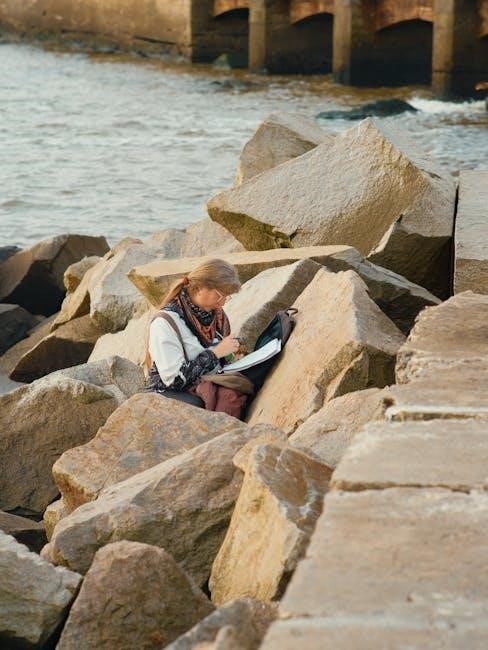
XXIII. The Book’s Exploration of the Writer’s Inner World
Annie Dillard’s The Writing Life, readily available as a PDF via OverDrive and the Internet Archive, profoundly explores the often turbulent inner landscape of the writer. The book meticulously details the uncertainties, doubts, and moments of self-consciousness inherent in the creative process.
Dillard doesn’t shy away from portraying the vulnerability and risk-taking required to produce authentic work, offering a candid account of her personal struggles and experiences as a writer, making it a deeply introspective read.
XXIV. Conclusion: The Timeless Wisdom of “The Writing Life”
Annie Dillard’s The Writing Life, accessible as a PDF through platforms like OverDrive and the Internet Archive, remains remarkably relevant for aspiring writers. The book’s enduring legacy stems from its honest portrayal of the writing process – the isolation, the doubt, and the eventual, hard-won clarity.
Dillard’s insights into language, observation, and courage offer timeless guidance, solidifying The Writing Life as a crucial text for anyone dedicated to the craft of writing and self-expression.